With the sunset of Morehouse Cowles, DisperseTech now offers compatible impeller blades for legacy mixers. Customers...

Search in blog
Blog categories
Latest posts
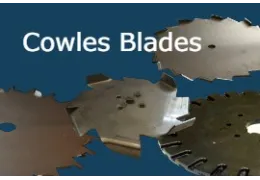
Morehouse Cowles Sunset – DisperseTech Offers Compatible Impeller Blades
Read more
Unleashing the Power of Dispersion Blades: A Comprehensive Guide to Enhanced Mixing Efficiency
Read more
In the dynamic world of mixing processes, the efficiency of your equipment can make or break your operations. Enter...

Popular posts

Properties of Common Solvents
Density, boiling point, evaporation rate, and flash point of common solvents
Read more

Tip Speed Definition and Formula
Blade Speed (tip speed), measures how far a point on the outer most edge of the disperser blade travels in a given...
Read more
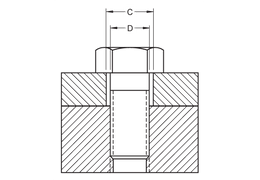
CLEARANCE HOLE CHART
Clearance hole chart for inch bolts and screws according to ASME B18.2.8
Read more

Paint Formulation
Paint consists of four basic components:
Resin
Pigment
Solvent
Additives
The performance of a coating is influenced...
Read more
Viscosity Conversion
Viscosity Conversion table comparing some of the typical viscosity scales used in Paint and Coatings including:...
Read more
Latest comments
-
 MalcomizingWe have a customer that needs parts Malcomized, could you...
 -
electricianGreat technical overview! This blog clearly explains...
-
electricianClear overview of different electrical service types and...
-
Blade to mix sand into paintUsed to have a Teflon on plastic blade need one for my...
-
cpvc & paint mix formulavery good excellent OK
Featured posts
Morehouse Cowles Sunset – DisperseTech Offers Compatible Impeller Blades
With the sunset of Morehouse Cowles, DisperseTech now offers compatible impeller blades for legacy mixers. Customers...
Read more
Unleashing the Power of Dispersion Blades: A Comprehensive Guide to Enhanced Mixing Efficiency
In the dynamic world of mixing processes, the efficiency of your equipment can make or break your operations. Enter...
Read more
CLEARANCE HOLE CHART
Clearance hole chart for inch bolts and screws according to ASME B18.2.8
Read more
Blog tags
No featured images
Archived posts
Top authors
What to consider when moving to an Inverter
AC Motors - Fixed Speed
AC motors play an important role in many operations inside a chemical plant. From pumps, fans, mixers, conveyors, and many other applications where there is a need to transform electrical energy to mechanical energy. The AC motor delivered constant speed based on the power supplied.
The base speed of an AC motor depends on two factors, the number of motor poles and the frequency of the applied power.

So a 4 pole motor operating at 60hz would have a nominal speed of 1800 rpm. Other typical motor speeds are 900, 1200, and 3600 rpm.
Actual shaft speed is the base RPM minus Slip. Slip is 3-5%of the Base Speed for a NEMA B Motor
Using one of these standard motors and a proper belt or gear reduction, an appropriate output speed can be supplied to meet your requirements.
Variable Speed Flexibility
There are times when fixed-speed operation does not offer the needed flexibility.
There have been some creative solutions over the years. A still operational disperser circa 1950 is using an automotive transmission to change output speed. The mixer is stopped transmission is shifted and the machine is restarted at a different speed.
Adjustable Pitch Belt Drives
The most common mechanical speed control is the adjustable pitch belt drives. There are two basic types.
Fixed Center Distance
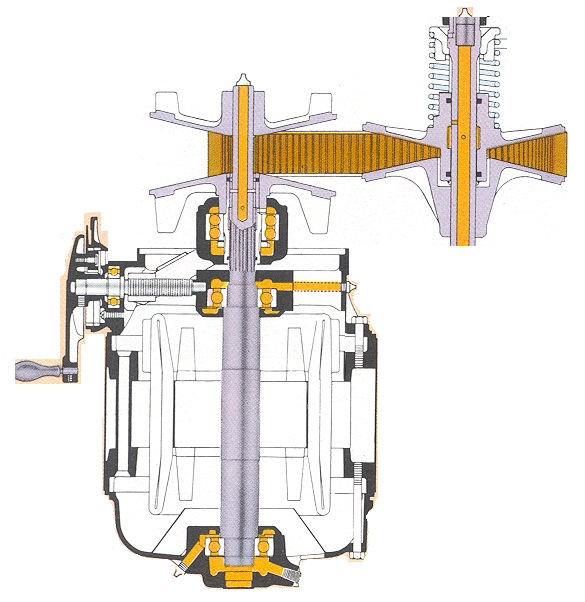
Two sets of sheaves vary the speed of the output shaft. At the motor end, the lower conical sheave travels laterally on the motor shaft varying the distance between it and the fixed upper sheave. The sheave separation determines the depth at which a belt or chain rides inside the sheave, thereby providing various pitch diameters. The spring-loaded sheave set on the driven shaft adjusts for the change in motor sheaves.
Variable Center Distance
These drives utilize a similar spring-loaded pulley, but the other end is a fixed pulley. This distance between the motor shaft and driven shaft is varied, typically by moving the motor, causing the pitch diameter on the spring-loaded pulley to change.
These adjustable pitch drives were common through 40 hp and with two sets of motor and driven sheaves even allowed operation through 100 hp.
Variable Frequency Drives (VFD)
My first exposure to AC drives, inverters, was in the late 1980's. Advances in inverter technology have reduced controller cost and size and improved performance and reliability. The inverter popularity continues to increase virtually replacing most mechanical speed control options for new equipment installations.
AC drives operate by adjusting the frequency and voltage supplied to ac motors. The frequency determines motor speed as we showed with the earlier equation. To maintain constant torque, it is necessary to keep voltage and frequency in a constant relationship. When the frequency applied to the motor is reduced, the voltage must also be reduced to limit the current drawn by the motor at reduced frequencies. AC drives maintain a constant Volts per Hertz relationship from 0-60 Hz. At low frequencies, the voltage may be boosted to give the motor extra torque for break-away and initial acceleration. Above 60 Hz most drives will hold the voltage constant.
Inverter Drive Benefits
- Maintenance is the single best advantage, No belts to change, no oil to add no sheaves to grease.
- The simplicity of the speed change makes the use of a VFD for variable speed an excellent choice. These inverters can be easily configured for local, remote, or automated control.
- Inherent soft start/stop operation resulting in less mechanical shock of belts, gears, chains, etc.
- Improved efficiency - 95% efficiency over that of the 75% of mechanical drives - lower power costs.
Inverter Concerns
As with any technology, it is necessary to understand its operation. One large concern is the torque/power characteristics. While the adjustable pitch drives are constant power devices, the inverters are constant torque devices.
In the past, it was common practice to supply a 30 hp mechanical drive disperser with a top shaft speed of 2400 rpm. It offered the flexibility of operating on a wide range of batch sizes with simple blade changes. Operating with an 8" blade at 2400 rpm in a drum batch delivered the target 5000 feet per minute peripheral speed. Later changing to a 14" blade running at 1365 rpm in a 300-gallon batch we achieved the target 5000 feet per minute.
With the constant torque VFD, this design does not function. On the mechanical drive, the adjustable belt drive delivers constant power throughout the speed range. Delivering 30 hp to the 8" blade @ 2400 rpm and 30 hp to the 14" blade @ 1354 rpm. The VFD delivers constant torque. So the inverter delivers the 30 hp @ 2400 rpm, but only delivers 17 hp at 1354 rpm to the 14" blade where the full horsepower is required.
Retrofitting a system can introduce other issues. Inverter Duty Motors are designed to dissipate heat despite reduced motor/fan speeds. Existing motors particularly TEFC and TENV design may experience cooling issues, especially in low-speed high torque operations. Bearing damage can also occur due to induced currents through the shaft of the motor and into the bearing housing. Many motors today are equipped with insulated bearings and are better able to survive these currents.
THE INVERTER IS NOT A REDUCER. It should be used for speed control not speed reduction.
I have seen this at many companies. They get the power requirements correct, but do not consider power available at speed. A customer purchased a 75 hp disperser with a 24" blade. The mixer needed to operate at 800 rpm. The mixer delivered had a 75 HP motor direct coupled to the shaft. In operation they were never able to exceed around 600 rpm before the motor tripped out. The mixer delivered 75 hp at 1800 rpm. They need 75 hp at 800 rpm and only around 33 hp would be available. We built them a new mixer, A fixed speed v-belt drive reduce motor speed from 1800 at the motor to 800 at the shaft. We were able to re-use the existing motor and inverter and had a functional machine that operated from 80-800 rpm.
The Inverter offers an excellent alternative for variable speed control. It is not a panacea for all speed related issues, but for the properly configured systems it offers excellent speed control alternative with flexibility, easy setup and operation.
Leave a comment
Related posts
 Dual-Axis Centrifugal Mixer - A Better Mix
Review of the function and operation of planetary-centrifugal mixers. Published July 2010, Adhesives and Sealants...
Read more
JACKETED TANKS AND THERMAL SHOCK
Rapid changes in temperature of the heat transfer media can thermally shock the equipment. Typically, thermal shock...
Read more
Disperser Blade Mounting
To transfer torque from the shaft to the blade, manufacturers use a number of configurations. The two most common are...
Read more
DISPERSER CONFIGURATION
The design of a dispersion system begins by defining the batch size and product characteristics. From there we can...
Read more
Tip Speed Definition and Formula
Blade Speed (tip speed), measures how far a point on the outer most edge of the disperser blade travels in a given...
Read more