With the sunset of Morehouse Cowles, DisperseTech now offers compatible impeller blades for legacy mixers. Customers...

Search in blog
Blog categories
Latest posts
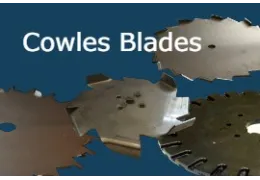
Morehouse Cowles Sunset – DisperseTech Offers Compatible Impeller Blades
Read more
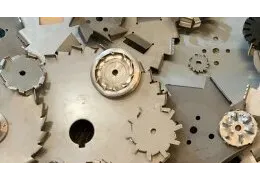
Unleashing the Power of Dispersion Blades: A Comprehensive Guide to Enhanced Mixing Efficiency
Read more
In the dynamic world of mixing processes, the efficiency of your equipment can make or break your operations. Enter...

Popular posts

Properties of Common Solvents
Density, boiling point, evaporation rate, and flash point of common solvents
Read more

Tip Speed Definition and Formula
Blade Speed (tip speed), measures how far a point on the outer most edge of the disperser blade travels in a given...
Read more
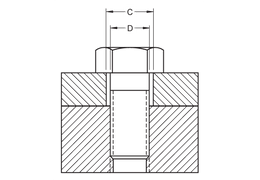
CLEARANCE HOLE CHART
Clearance hole chart for inch bolts and screws according to ASME B18.2.8
Read more

Paint Formulation
Paint consists of four basic components:
Resin
Pigment
Solvent
Additives
The performance of a coating is influenced...
Read more
Viscosity Conversion
Viscosity Conversion table comparing some of the typical viscosity scales used in Paint and Coatings including:...
Read more
Latest comments
-
 MalcomizingWe have a customer that needs parts Malcomized, could you...
 -
electricianGreat technical overview! This blog clearly explains...
-
electricianClear overview of different electrical service types and...
-
Blade to mix sand into paintUsed to have a Teflon on plastic blade need one for my...
-
cpvc & paint mix formulavery good excellent OK
Featured posts
Morehouse Cowles Sunset – DisperseTech Offers Compatible Impeller Blades
With the sunset of Morehouse Cowles, DisperseTech now offers compatible impeller blades for legacy mixers. Customers...
Read more
Unleashing the Power of Dispersion Blades: A Comprehensive Guide to Enhanced Mixing Efficiency
In the dynamic world of mixing processes, the efficiency of your equipment can make or break your operations. Enter...
Read more
CLEARANCE HOLE CHART
Clearance hole chart for inch bolts and screws according to ASME B18.2.8
Read more
Blog tags
No featured images
Archived posts
Top authors
Unleashing the Power of Dispersion Blades: A Comprehensive Guide to Enhanced Mixing Efficiency
Understanding the Science Behind Mixing Efficiency
Mixing efficiency is a critical component of many industrial processes, directly influencing the quality, consistency, and performance of the final product. At its core, mixing is about creating a uniform distribution of different components, whether they are solids, or liquids. Achieving this uniformity requires overcoming various physical properties such as viscosity, density, and particle size. This is where the science of mixing comes into play, encompassing principles of fluid dynamics, thermodynamics, and material science.
Dispersion blades are engineered to address these challenges by enhancing the mixing process. They work by generating shear forces that break down particles and mix them thoroughly. The design of these blades plays a crucial role in determining the efficiency of the mix. Factors such as blade shape, size, and speed can significantly impact the blending outcome. By understanding the mechanics of how dispersion blades interact with materials, one can optimize the mixing process to achieve the desired consistency and quality.
Furthermore, the mixing process is not merely about combining ingredients but also about controlling the reaction rates and interaction between different components. Proper mixing techniques can be employed to control chemical reactions, prevent formation of agglomerates and solids settling, and prevent hotspots or inconsistencies that could compromise the product's integrity. Therefore, the efficiency of dispersion blades is not just about speed but also about precision and control in the mixing process. By delving into the science behind mixing efficiency, one can appreciate the complexity and importance of using the right tools and techniques.
Types of Dispersion Blades and Their Applications
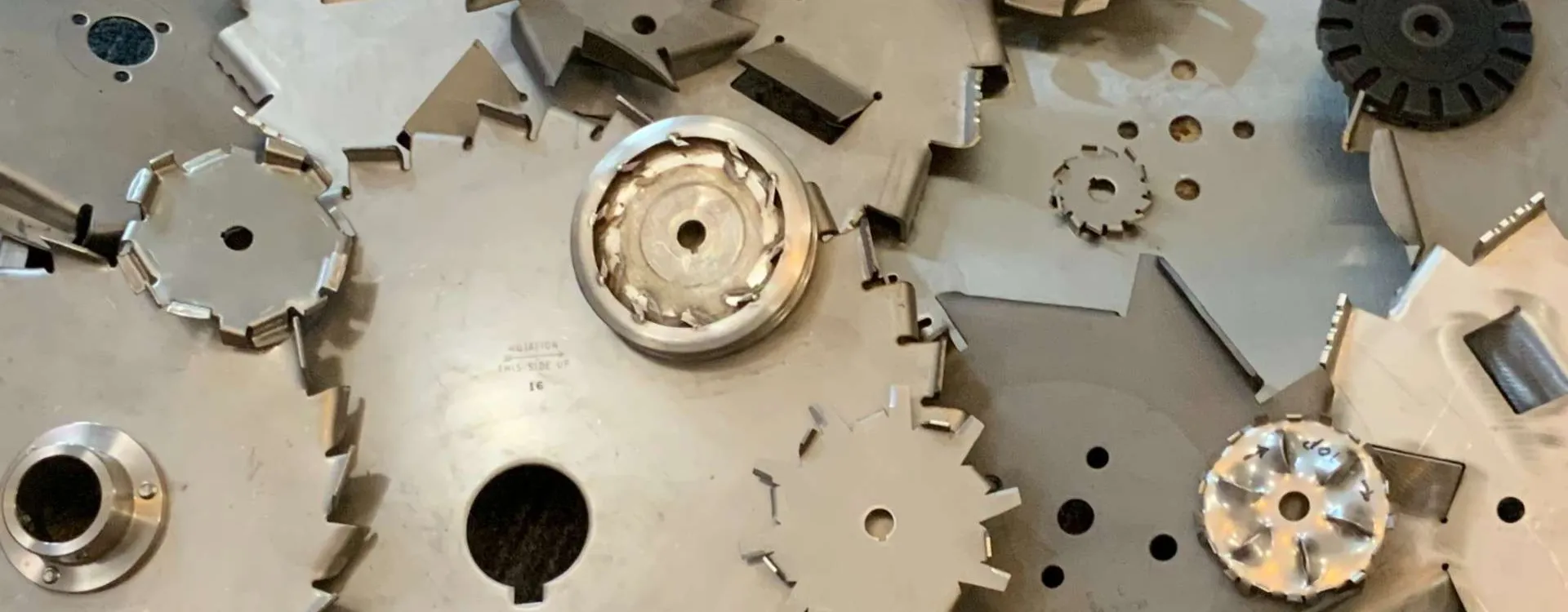
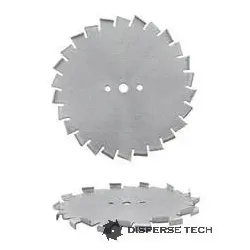
Dispersion blades come in various designs, each tailored to specific applications and materials. The most common types include sawtooth blades, high-profile pumping blades, and high shear ring blades, each offering unique benefits and suited for different mixing tasks. Sawtooth blades, for instance, are characterized by their staggered teeth, these blades create high shear forces ideal for breaking down agglomerates and dispersing powders into liquids. Sawtooth blades are widely used in the paint, ink, and adhesive industries, where achieving a fine, uniform dispersion is crucial.
Ring blades, on the other hand, are designed to operate at even higher speeds, generating intense shear forces that can emulsify, homogenize, and disperse even the most challenging materials. These blades are often used in the production of pigment dispersions, mill bases, automotive coatings, pharmaceuticals, and food products, where achieving a stable emulsion or producing the best final grind is essential. The high-shear action ensures that particles are finely divided and uniformly distributed, resulting in a smooth, consistent product.
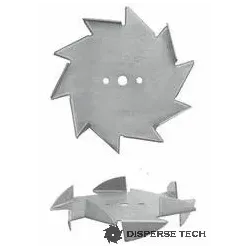
Pumping blades are another popular type of dispersion blade, known for their versatility and efficiency in mixing both low and high-viscosity materials. These blades feature larger teeth that create a more aggressive radial flow pattern, promoting thorough mixing while sacrificing some shear and preventing the formation of dead zones even in higher viscosity products. Pumping blades are commonly used in let down operations, where achieving a homogeneous mixture is critical for the subsequent processing steps. By selecting the appropriate type of dispersion blade for the specific application, one can significantly enhance mixing efficiency and achieve optimal results.
Key Benefits of Using Dispersion Blades in Mixing Processes
The use of dispersion blades in mixing processes offers numerous benefits that can enhance productivity, improve product quality, and reduce operational costs. One of the primary advantages is the ability to achieve a uniform and consistent mixture, which is essential for ensuring the quality and performance of the final product. Dispersion blades are designed to generate high shear forces that break down particles and disperse them evenly throughout the mixture, resulting in a homogeneous blend that meets the desired specifications.
Another significant benefit of using dispersion blades is the reduction in mixing time. Traditional mixing methods often require extended processing times to achieve the desired level of dispersion, which can be both time-consuming and energy-intensive. Dispersion blades, with their efficient design and high shear capabilities, can significantly shorten the mixing time, allowing for faster production cycles and increased throughput. This drastic reduction in batch time not only boosts productivity but also reduces overall energy consumption despite significantly higher instantaneous energy levels resulting in operational savings.
Factors Affecting Mixing Efficiency with Dispersion Blades
Several factors can influence the efficiency of mixing when using dispersion blades, and understanding these factors is crucial for optimizing the process. One of the most critical factors is the speed at which the blade operates. The rotational speed of the blade determines the shear forces generated, which in turn affect the degree of dispersion and mixing. Higher speeds generally result in greater shear forces and more effective mixing, but they can also lead to increased energy consumption and wear on the equipment. Therefore, finding the optimal speed for the specific application is essential for achieving efficient and cost-effective mixing.
The viscosity of the materials being mixed is another important factor to consider. Viscosity affects the flow behavior of the materials and their resistance to shear forces. High-viscosity materials require more energy and produce higher shear forces during mixing, while low-viscosity materials may require higher speeds to achieve the shear levels necessary for dispersion. Selecting the appropriate dispersion blade and operating conditions based on the viscosity of the materials is crucial for optimizing mixing efficiency and achieving the desired results.
The design and geometry of the dispersion blade also play a significant role in determining mixing efficiency. Different blade designs generate different blend of flow and shear forces, which can impact the dispersion and mixing of the materials. By selecting the appropriate blade design for the specific application, one can optimize grinding efficiency while ensuring sufficient circulation to insure product quality.
How to Choose the Right Dispersion Blade for Your Needs
Choosing the right dispersion blade for your specific mixing needs requires careful consideration of several factors, including the properties of the materials being mixed, the desired grind or particle size, and the specific requirements of the application. One of the first steps in selecting the appropriate dispersion blade is to evaluate the viscosity of the materials. High-viscosity materials may require high-flow blades that can generate the necessary forces to achieve effective mixing, while low-viscosity materials may be better suited for lower profile blades to allow operation at the speeds required for dispersion.
The specific requirements of the application, such as the desired consistency, texture, and stability of the final product, should also guide the selection of the dispersion blade. For example, in the production of cosmetics or pharmaceuticals, achieving a stable emulsion or suspension is critical, and high-shear blades may be required to achieve the desired results. In contrast, in the production of food products, maintaining the integrity of the ingredients and achieving a smooth, consistent texture may be more important, and pumping blades operating at reduced speed may be more appropriate. By carefully evaluating the specific needs of the application and the properties of the materials, one can select the right dispersion blade to achieve optimal mixing efficiency and product quality.
Best Practices for Operating Dispersion Blades
Operating dispersion blades effectively requires following best practices to ensure optimal performance and achieve the desired mixing results. One of the most important practices is to start with a thorough understanding of the materials being mixed, including their viscosity, particle size, and distribution. This information is crucial for selecting the appropriate dispersion blade and determining the optimal operating conditions, such as blade speed and mixing time. Conducting preliminary tests and trials can help identify the best parameters for achieving efficient and consistent mixing.
Proper maintenance and care of the dispersion blades and mixing equipment are also essential for ensuring long-term performance and reliability. Regular inspections and cleaning of the blades can prevent the buildup of material and ensure that the blades remain sharp and effective. Additionally, monitoring the condition of the blades and replacing them when necessary can prevent issues such as excessive wear, reduced mixing efficiency, and potential contamination of the product. Implementing a routine maintenance schedule and following the manufacturer's recommendations can help extend the lifespan of the equipment and maintain optimal mixing performance.
Another key best practice is to monitor and control the mixing process closely. This includes regularly checking the consistency and quality of the mixture, adjusting the blade speed and other parameters as needed, and ensuring that the mixing time is sufficient to achieve the desired results. Using advanced monitoring and control systems can help automate these tasks and provide real-time feedback on the mixing process, allowing for more precise adjustments and improved efficiency. By following these best practices, operators can maximize the performance of dispersion blades and achieve consistent, high-quality mixing results.
Troubleshooting Common Issues with Dispersion Blades
Despite their effectiveness, dispersion blades can encounter various issues that may affect mixing efficiency and product quality. One common issue is inadequate dispersion, where the materials are not evenly mixed or contain visible agglomerates. This can be caused by factors such as insufficient blade speed, inappropriate blade design, or incorrect mixing time. To address this issue, operators should first review the mixing parameters and make adjustments as needed. Increasing the blade speed, selecting a different blade design, or extending the mixing time can often resolve inadequate dispersion and achieve a more uniform mixture.
Another common issue is excessive wear or damage to the dispersion blades, which can result from prolonged use, high-speed operation, or mixing abrasive materials. Excessive wear can reduce the effectiveness of the blades, leading to decreased mixing efficiency and potential contamination of the product. To prevent this issue, operators should regularly inspect the blades for signs of wear and damage and replace them as needed. If wear rates are severe, heat hardening, or hard coating the blades can extend life. Implementing a routine maintenance schedule and following the manufacturer's recommendations can help extend the lifespan of the blades and maintain optimal performance.
Contamination of the mixture is another issue that can arise during the mixing process. This can occur due to the buildup of material on the blades, inadequate cleaning, or the introduction of foreign particles. To prevent contamination, operators should ensure that the blades and mixing equipment are thoroughly cleaned between batches and that proper hygiene practices are followed. Additionally, using high-quality materials and maintaining a clean mixing environment can help minimize the risk of contamination and ensure the integrity of the final product. By identifying and addressing common issues, operators can maintain the performance of dispersion blades and achieve consistent, high-quality mixing results.
Innovations in Dispersion Blade Technology
The field of dispersion blade technology is continuously evolving, with new innovations and advancements aimed at improving mixing efficiency and performance. A proven development in this area is the use of advanced materials and coatings for dispersion blades. These materials, such as ceramic and carbide coatings, offer enhanced durability and wear resistance, allowing the blades to maintain their sharpness and effectiveness for longer periods. Additionally, these advanced materials can reduce the risk of contamination and improve the overall hygiene of the mixing process.
Conclusion: Maximizing Mixing Efficiency with Dispersion Blades
In conclusion, dispersion blades are a powerful tool for enhancing mixing efficiency and achieving consistent, high-quality results in various industrial processes. By understanding the science behind mixing efficiency, selecting the appropriate type of dispersion blade for the specific application, and following best practices for operation and maintenance, manufacturers can optimize their mixing processes and achieve superior performance. The benefits of using dispersion blades, including reduced mixing time, improved product quality, and greater control over the mixing process, make them an invaluable asset in industries ranging from pharmaceuticals and cosmetics to food processing and chemical manufacturing.
As technology continues to advance, innovations in dispersion blade design, materials, offer new opportunities for further improving mixing efficiency and performance. By staying informed about these developments and adopting the latest advancements, manufacturers can remain competitive and drive productivity in their operations. Whether you are a novice or a seasoned professional, understanding how to unleash the full power of dispersion blades can revolutionize your production process and help you achieve your mixing goals.
Maximizing mixing efficiency with dispersion blades is not just about selecting the right equipment, but also about understanding the intricacies of the mixing process and continuously striving for improvement. By investing in high-quality dispersion blades, implementing best practices, and staying abreast of the latest innovations, manufacturers can unlock the full potential of their mixing processes and achieve exceptional results. So, take the time to explore the world of dispersion blades, experiment with different techniques, and discover how you can elevate your mixing efficiency and drive success in your operations.
Posted in:
Mixing and Dispersion
Related products
F-Blade | Sawtooth Dispersion Blade
Price: $218.00
The F Style Sawtooth high shear disperser blade is the most popular and...
G-Blade | Pumping Blade for Dispersers
Price: $236.00
The G-Blade is a high-vaned "Pumper" blade or Type 7 dispersion blade...
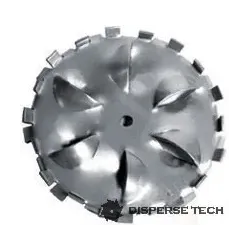
ITT Dispersion Blade
Price: $526.00
The Conn ITT (Intensive Type with Teeth), Type R, for high shear and...
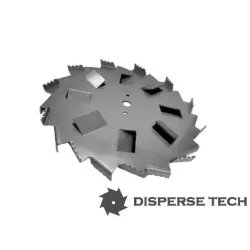
HSXP Blade
Price: $375.00
The HSXP series, Turbo Pump blade has the same serrated teeth as the HSX...
Leave a comment
Related posts
 What to consider when moving to an Inverter
Inverters offer many benefits over traditional mechanical drives with fewer moving parts, larger speed ranges,...
Read more
Dual-Axis Centrifugal Mixer - A Better Mix
Review of the function and operation of planetary-centrifugal mixers. Published July 2010, Adhesives and Sealants...
Read more
JACKETED TANKS AND THERMAL SHOCK
Rapid changes in temperature of the heat transfer media can thermally shock the equipment. Typically, thermal shock...
Read more
Disperser Blade Mounting
To transfer torque from the shaft to the blade, manufacturers use a number of configurations. The two most common are...
Read more
DISPERSER CONFIGURATION
The design of a dispersion system begins by defining the batch size and product characteristics. From there we can...
Read more