With the sunset of Morehouse Cowles, DisperseTech now offers compatible impeller blades for legacy mixers. Customers...

Search in blog
Blog categories
Latest posts
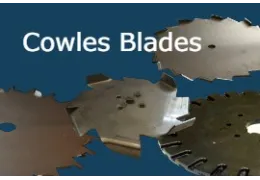
Morehouse Cowles Sunset – DisperseTech Offers Compatible Impeller Blades
Read more

Unleashing the Power of Dispersion Blades: A Comprehensive Guide to Enhanced Mixing Efficiency
Read more
In the dynamic world of mixing processes, the efficiency of your equipment can make or break your operations. Enter...

Popular posts

Properties of Common Solvents
Density, boiling point, evaporation rate, and flash point of common solvents
Read more

Tip Speed Definition and Formula
Blade Speed (tip speed), measures how far a point on the outer most edge of the disperser blade travels in a given...
Read more
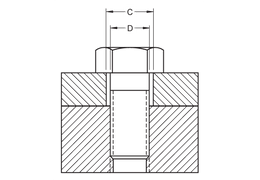
CLEARANCE HOLE CHART
Clearance hole chart for inch bolts and screws according to ASME B18.2.8
Read more

Paint Formulation
Paint consists of four basic components:
Resin
Pigment
Solvent
Additives
The performance of a coating is influenced...
Read more
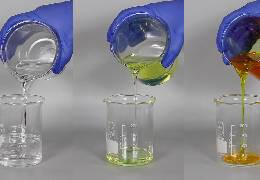
Viscosity Conversion
Viscosity Conversion table comparing some of the typical viscosity scales used in Paint and Coatings including:...
Read more
Latest comments
-
 MalcomizingWe have a customer that needs parts Malcomized, could you...
 -
electricianGreat technical overview! This blog clearly explains...
-
electricianClear overview of different electrical service types and...
-
Blade to mix sand into paintUsed to have a Teflon on plastic blade need one for my...
-
cpvc & paint mix formulavery good excellent OK
Featured posts
Morehouse Cowles Sunset – DisperseTech Offers Compatible Impeller Blades
With the sunset of Morehouse Cowles, DisperseTech now offers compatible impeller blades for legacy mixers. Customers...
Read more
Unleashing the Power of Dispersion Blades: A Comprehensive Guide to Enhanced Mixing Efficiency
In the dynamic world of mixing processes, the efficiency of your equipment can make or break your operations. Enter...
Read more
CLEARANCE HOLE CHART
Clearance hole chart for inch bolts and screws according to ASME B18.2.8
Read more
Blog tags
No featured images
Archived posts
Top authors
Disperser Blade Wear Treatments
hello
Disperser Blade Wear Treatments
Due to high tip speed of the dispersion blade, dispersion blades are subject to wear. Depending on formulations this wear can be severe. DisperseTech offers several wear treatments.
Heat Hardened
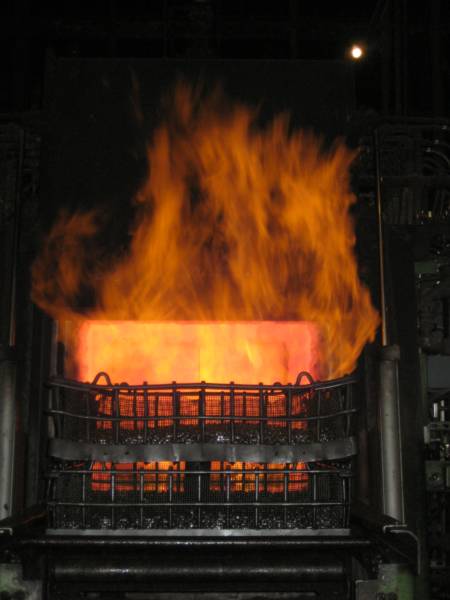
In order to extend the life of your blades in abrasive environments, we can offer surface hardened blades sometimes refered to as DuraTuf. The hardened blades are prepared by the Malcomizing process. In this heat treating process the passive oxide surface film of the stainless steel is broken down to permit nitrogen diffusion into the steel, at relatively low temperatures. This increases the Hardness to around 64-68 Rockwell C.
Although resistance to wear is the primary consideration, unlike other processes for hardening stainless steels, Malcomizing improves the fatigue life of the steel under dynamic stress. This reduces the likelyhood of cracks forming as a result of the blade flexing during mixing.
Our blade are used for both solvent and water-based coatings. Malcomized stainless steel retains corrosion resistance superior to that of stainless steel subjected to conventional nitriding, and far superior to nitrided low alloys.
The comparatively low temperatures involved in the process tends to minimizes distortion. Our Malcomized blades will show some distortion from the process, but this will not adversely affect operation 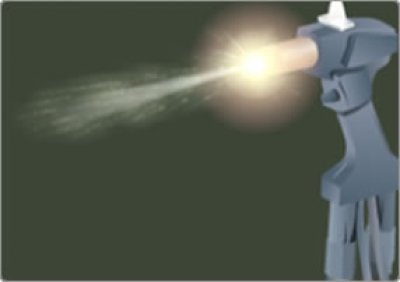
Plasma Coatings
DisperseTech offers Plasma Coated blades using both ceramic and metal Coatings. These coatings improve wear resistance of our blades. Plasma Spray is perhaps the most flexible of all of the thermal spray processes as it can develop sufficient energy to melt any material. Since it uses powder as the coating feedstock, the number of coating materials that can be used in the plasma spray process is almost unlimited. A high frequency arc is ignited between an anode (nozzle) and a cathode (electrode). Process gases (generally mixtures of argon, nitrogen, hydrogen and helium) flowing between them is ionized to become a plume of hot plasma gas with that exceed the surface of the sun of 6,600 °C to 16,600 °C (12,000 °F to 30,000 °F). When the coating material is injected into the gas plume, it is melted and propelled towards the target substrate.
Tungsten Carbide
The resulting tungsten carbide coating is excellent at protecting our blades from wear and abrasion. Tungsten Carbide, a very hard metallic coating. The coating has a very high bond strength and will strongly adhere to our base metal.
Ceramic / Chromium Oxide
Chrome oxide coatings are ceramic coatings and are very hard, but can be susceptible to chipping if the coating is extended to a sharp edge of a component. Our chromium oxide blades are both chemically inert and wear-resistant. The chromium oxide we use is a composite also containing titanium oxide and silicon dioxide resulting in improved cohesive strength, better toughness, and abrasive wear resistance. Care must be taken in handling the blades as chipping can occur.
Posted in:
Mixing and Dispersion
Leave a comment
Related posts
 What to consider when moving to an Inverter
Inverters offer many benefits over traditional mechanical drives with fewer moving parts, larger speed ranges,...
Read more
Dual-Axis Centrifugal Mixer - A Better Mix
Review of the function and operation of planetary-centrifugal mixers. Published July 2010, Adhesives and Sealants...
Read more
JACKETED TANKS AND THERMAL SHOCK
Rapid changes in temperature of the heat transfer media can thermally shock the equipment. Typically, thermal shock...
Read more
Disperser Blade Mounting
To transfer torque from the shaft to the blade, manufacturers use a number of configurations. The two most common are...
Read more
DISPERSER CONFIGURATION
The design of a dispersion system begins by defining the batch size and product characteristics. From there we can...
Read more