With the sunset of Morehouse Cowles, DisperseTech now offers compatible impeller blades for legacy mixers. Customers...

Search in blog
Blog categories
Latest posts
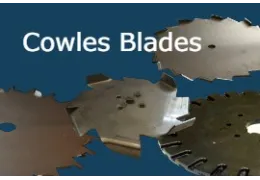
Morehouse Cowles Sunset – DisperseTech Offers Compatible Impeller Blades
Read more
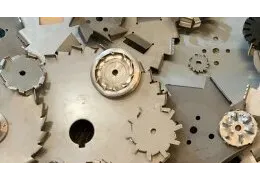
Unleashing the Power of Dispersion Blades: A Comprehensive Guide to Enhanced Mixing Efficiency
Read more
In the dynamic world of mixing processes, the efficiency of your equipment can make or break your operations. Enter...
Popular posts

Properties of Common Solvents
Density, boiling point, evaporation rate, and flash point of common solvents
Read more

Tip Speed Definition and Formula
Blade Speed (tip speed), measures how far a point on the outer most edge of the disperser blade travels in a given...
Read more
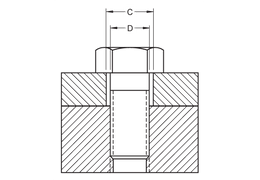
CLEARANCE HOLE CHART
Clearance hole chart for inch bolts and screws according to ASME B18.2.8
Read more

Paint Formulation
Paint consists of four basic components:
Resin
Pigment
Solvent
Additives
The performance of a coating is influenced...
Read more
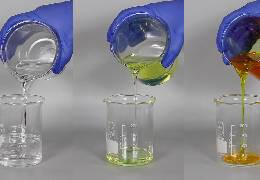
Viscosity Conversion
Viscosity Conversion table comparing some of the typical viscosity scales used in Paint and Coatings including:...
Read more
Latest comments
-
 MalcomizingWe have a customer that needs parts Malcomized, could you...
 -
electricianGreat technical overview! This blog clearly explains...
-
electricianClear overview of different electrical service types and...
-
Blade to mix sand into paintUsed to have a Teflon on plastic blade need one for my...
-
cpvc & paint mix formulavery good excellent OK
Featured posts
Morehouse Cowles Sunset – DisperseTech Offers Compatible Impeller Blades
With the sunset of Morehouse Cowles, DisperseTech now offers compatible impeller blades for legacy mixers. Customers...
Read more
Unleashing the Power of Dispersion Blades: A Comprehensive Guide to Enhanced Mixing Efficiency
In the dynamic world of mixing processes, the efficiency of your equipment can make or break your operations. Enter...
Read more
CLEARANCE HOLE CHART
Clearance hole chart for inch bolts and screws according to ASME B18.2.8
Read more
Blog tags
No featured images
Archived posts
Top authors
Specifying Disperser Blades
Blade Style: Most dispersion blades are formed from a circular disk of material, typically 304 stainless Steel. Teeth are formed around the perimeter of the disk by cutting slits into the disk and bending th resulting tabs. These blades perform several functions:
- shear - The flat center disk accelerates materials toward the outer edge of the blade. Due to the high tip speeds of the blades, material is rapidly accelerated to speeds of 4000 - 5000 feet per minute.
- flow - The blade teeth expose a surface which serves to pump material in the tank. The size of the teeth and angle affect the pumping capacity of the blade.
- impact - the teeth also serve as a source of impact for the agglomerates. The particles accelerated by the surface of the disk impinge on the blade teeth helping to break agglomerates.
- Others are fabricated from multiple sheets and machined to various profiles. While still others are cast or machined from various polymers. The Dispersion Blade section of our catalog provides more detail on the various blade types.
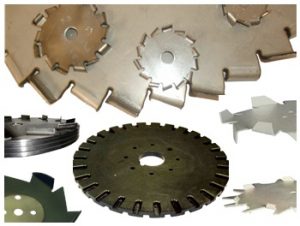
Blade Diameter: The diameter of MOST blades is measured from the outer most perimeter
Disperser Power: Both blade style and diameter together with the properties of the product being mixed contribute to the overall power required to drive the dispersion blade.
Blade Bore: In order to transfer torque from the mix shaft to the blade, manufacturers use a number of configurations holes, keyways and at time hubs. Additional detail can be found here.
Material of Construction: Most of our blades are 304 stainless steel, we do offer 316 stainless steel as have supplied more exotic materials such as hastalloy in the past. Aside from these we do supply polymer blades in HDPE and Urethane as well. Contact us with your particular requests.
Wear Resistant Options: Due to high tip speed of the dispersion blade, dispersion blades are subject to wear. Depending on formulations this wear can be severe. DisperseTech offers several options to enhance wear characteristics.
The following link will assist you in specifying your bore:
Posted in:
Mixing and Dispersion
Leave a comment
Related posts
 What to consider when moving to an Inverter
Inverters offer many benefits over traditional mechanical drives with fewer moving parts, larger speed ranges,...
Read more
Dual-Axis Centrifugal Mixer - A Better Mix
Review of the function and operation of planetary-centrifugal mixers. Published July 2010, Adhesives and Sealants...
Read more
JACKETED TANKS AND THERMAL SHOCK
Rapid changes in temperature of the heat transfer media can thermally shock the equipment. Typically, thermal shock...
Read more
Disperser Blade Mounting
To transfer torque from the shaft to the blade, manufacturers use a number of configurations. The two most common are...
Read more
DISPERSER CONFIGURATION
The design of a dispersion system begins by defining the batch size and product characteristics. From there we can...
Read more